17 Aug 2026
Blog
India's VALORANT Qualification Moment: Why PC Esports Needs Patience and Structure
India's VALORANT qualification story is a reminder that PC esports growth depends on team chemistry, coaching, event access, and long-term player development.
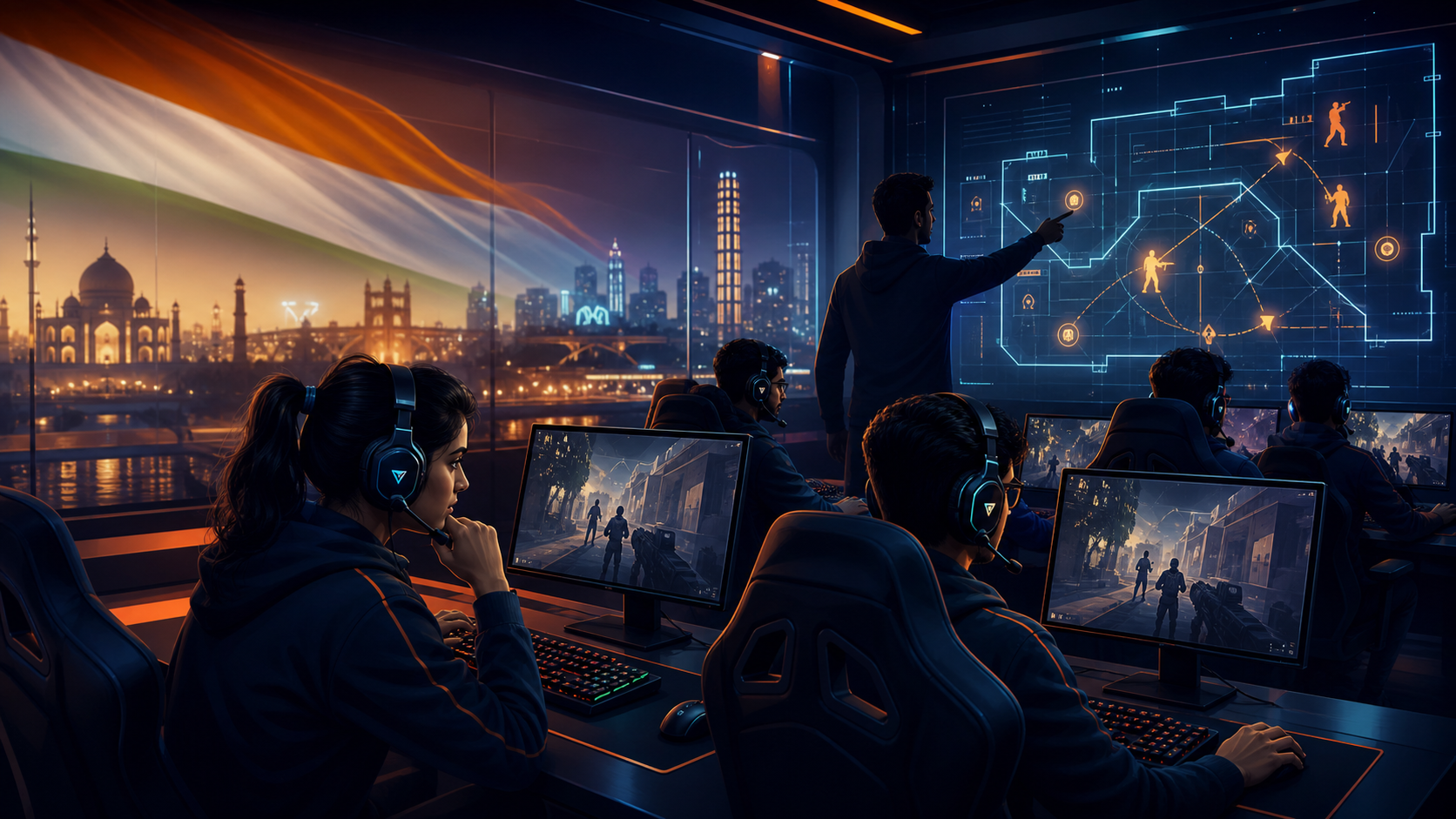
India's VALORANT qualification for a major national-team style global event became one of the more meaningful recent stories for the Indian gaming community. It matters because it shows a different side of Indian esports. Mobile titles still dominate attention, but PC esports has its own identity, discipline, and long-term promise.
The achievement should not be treated as a one-day headline. It should be treated as evidence that Indian PC esports can grow when the right pieces come together: player chemistry, coaching, tournament exposure, and a community willing to support slow progress.
Why This Moment Feels Important
Indian PC esports has often lived under the shadow of mobile esports numbers. That is understandable because mobile access is broader. But competitive depth is not measured only by audience size. VALORANT requires tactical preparation, map control, utility timing, aim discipline, and coordinated mid-round calls. A strong result in that environment tells young players that India can compete beyond its most popular mobile titles.
This does not mean India has solved every problem. It means there is proof of direction. For a developing scene, proof matters.
Team Chemistry Beats Paper Rosters
One of the strongest lessons from the qualification story is chemistry. A roster is not automatically strong because five skilled players are listed together. Tactical shooters punish confusion quickly. Players must understand each other's timing, trust utility setups, and react to mid-round information without panic.
Local teams can learn from this immediately. If your squad changes players every week, it becomes difficult to build patterns. Sometimes the best upgrade is not replacing a teammate. It is creating clearer roles, better review habits, and more honest communication.
Coaching Is Not Optional Anymore
Many Indian teams still treat coaching as a luxury. At higher levels, it is a necessity. A coach helps a team prepare opponents, clean mistakes, structure practice, manage pressure, and keep feedback from becoming personal.
Even local teams can borrow this idea without hiring a professional coach. One player can review VODs. A trusted friend can track mistakes. A community organizer can host analysis sessions. The point is to separate emotion from improvement.
What Mobile Players Can Learn From PC Esports
The mobile and PC communities should not be divided. They can learn from each other. Mobile esports in India has scale, creator energy, and grassroots participation. PC esports often brings deeper tactical review habits and structured team preparation.
A BGMI squad can learn from VALORANT-style communication discipline. A VALORANT team can learn from mobile esports' community-building energy. Both sides benefit when Indian gaming is treated as one ecosystem with different formats.
Why Patience Matters
Every qualification story creates excitement, but sustainable growth is slower. Fans should celebrate the moment without expecting instant dominance. Players need more events, better scrim culture, stronger domestic circuits, and stable organizations.
A scene grows when losses are studied instead of mocked. If Indian teams go international and struggle, the correct reaction is not ridicule. It is analysis. What was the gap? Utility? Map pool? Pressure? Decision speed? Those questions build maturity.
The Role of National Representation
National representation changes how casual viewers understand esports. A club name may excite existing fans, but an India jersey can reach people who are new to competitive gaming. It gives parents, schools, colleges, and mainstream sports audiences a familiar frame.
This is why qualification moments matter beyond one title. They make esports easier to explain. They show that gaming can involve discipline, selection, coaching, and international competition.
Practical Advice for Aspiring VALORANT Players
Aspiring players should build a routine around aim, utility, map knowledge, and review. Aim training alone is not enough. Learn default setups. Understand when to fight for space and when to give it. Practice communication that is short, useful, and calm.
Players should also protect their mindset. Tactical shooters can become frustrating because mistakes are visible. The best players learn to separate identity from performance. A bad map is not a bad career. It is information.
Key Takeaways
India's VALORANT qualification is important because it expands the imagination of Indian esports beyond mobile dominance.
PC esports needs patience, coaching, chemistry, and consistent domestic structure.
Mobile and PC communities should learn from each other instead of competing for legitimacy.
Conclusion
This moment should make Indian players proud, but it should also make them practical. A qualification is not the finish line. It is a signpost. If the community responds with better practice, better events, and better coverage, India's PC esports future can become much stronger than a single headline.